Home can support without ceasing to feel like home.
Our approach begins with supporting the life you want to keep living.
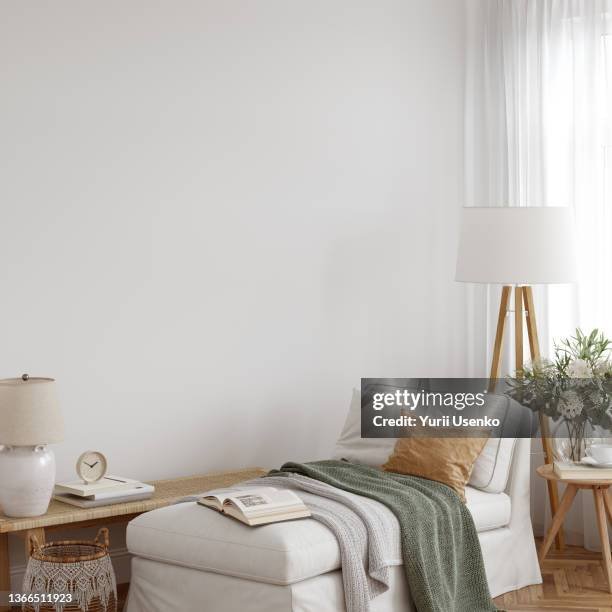
Our homes are arranged around the bodies, routines, responsibilities, and ways of living we have now. Our concept of home changes, when the physical capacity of yesterday, is no longer the physical capacity of today.
A familiar space can become a point of friction point in our day to day life. Or if considered before hand, can become a space that changes to suit our needs.
We begin by looking at the relationship between you, your body, your support, and your home.
The Demands of Daily Life
Recovery can temporarily change how we move, reach, lift, bend, rest, and move through our homes. Some of those limitations are expected and necessary to support healing. But ordinary tasks, getting dressed, preparing something to eat, doing laundry, caring for a pet, reaching something we use every day, can carry demands we rarely notice until our capacity changes.
When these basic tasks are unaccounted for, they can leave us feeling depleted, demoralized, and frustrated, not simply because our bodies are recovering, but because the environment may be asking more of us than it needs to.
FormKind brings together an understanding of the human body and changing capacity with spatial planning, organization, furniture and object placement, design, and positive affordances. We look for where the home can take on some of that work: bringing something within reach, changing where an activity happens, reconsidering a piece of furniture, simplifying a routine, or making support easier to access.
The goal isn't to design away the realities of recovery. It's to create a home that responds to those realities with kindness.
The FormKind Approach
-
Access is more than whether something can be reached or used. We consider what makes daily life more available while preserving choice, identity, comfort, and the feeling of home.
We ask not only what an adaptation makes possible, but what the experience of using it asks you to give up.
Access determines whether a task or familiar routine is available to you in your current state. Dignity asks does this experience of home respect and account for my current capacity.
-
Recovery is not one fixed state. Your capacity, routines, available support, and the parts of home you use most may change as recovery progresses.
We design environments that can respond with you—adapting, expanding, contracting, or returning to familiar roles as your needs change.
A space that works during the earliest stage of recovery may need to function differently as activity expands, support changes, or familiar routines return.
-
Recovery doesn’t automatically require a home full of new things. We begin by looking at what already supports you, what can move, what can take on another role, and what might be borrowed or introduced temporarily.
A familiar cabinet can become a meal station. A chair can hold accessible clothing. A room can support a different activity for a while. When something new is needed, it should earn its place by improving access, reducing effort, supporting comfort, or continuing to be useful beyond recovery.
We preserve what works, adapt what can, and add only what meaningfully improves the way the home works.
Working With What Exists does not mean making do with something unsuitable. Sometimes a new object, service, or design intervention is the better answer.
-
Every room already supports certain ways of moving, resting, working, gathering, and being. When capacity changes, we ask whether those same conditions still fit.
Furniture scale and placement, lighting, materials, objects, and atmosphere all influence how a space is used and what it makes available.
We consider both physical fit and lived experience—how the space needs to work now, and how it needs to feel.
We design not only for what someone needs to do in a space, but for how they need to be able to be there.
The goal is not to impose a recovery aesthetic, but to design around the way someone needs to live.
From Understanding to Design Once we understand how your daily life, body, support, and home intersect, we begin looking for where the environment can do more.
That may mean creating a pathway, moving an everyday activity, rethinking a room’s role, adapting furniture, reorganizing what stays in reach, adding automation, or introducing a new object where it genuinely improves access, comfort, or use.
Sometimes the best solution is something new. Sometimes it is seeing what is already there differently.
Our Services
-
I need focused help thinking through my home.
Collaborative, hourly, lighter deliverables.
-
I want a developed plan ready for recovery.
More comprehensive analysis, spatial planning, visuals, sourcing, and implementation priorities.
-
My actual recovery has changed what I need from the home.
Responsive follow-up / redesign based on lived experience.