IN PRACTICE
Meaningful change doesn't always look dramatic.
Through lived observations and applied design studies, we explore how ordinary spaces can respond to changing capacity. From rethinking the act of getting dressed to reconsidering how a home supports everyday routines, each study reveals how thoughtful changes in arrangement, access, and function can make daily life more manageable, dignified, and easeful.
Reimagining Daily Life During Recovery
-
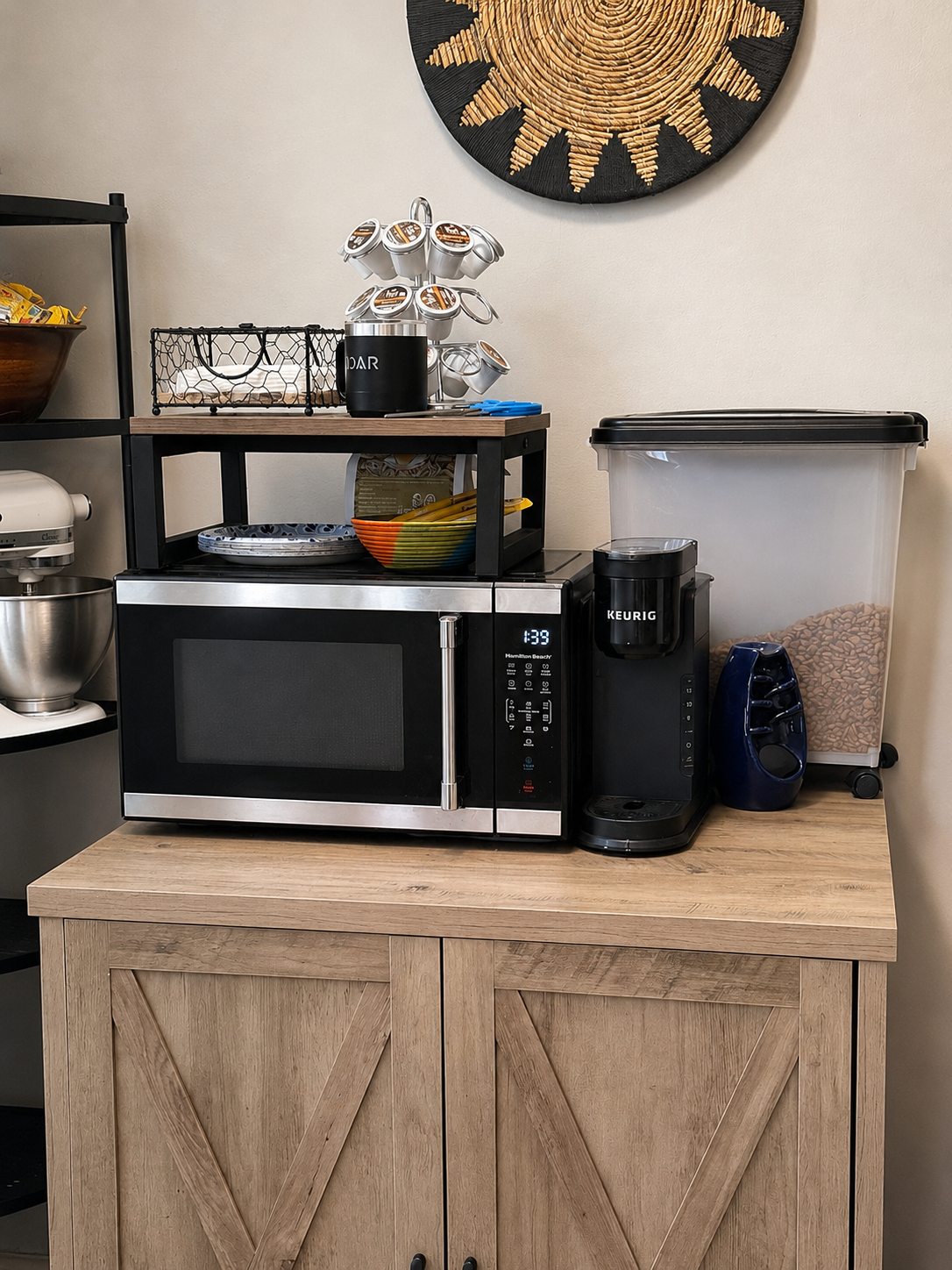
Support access to meals, coffee, pet care, and everyday routines while preserving familiarity, dignity, and appropriate independence during recovery. The goal was not to redesign the home around limitation, but to help the existing space respond to changing capacity and support.
-
Before surgery, the narrow kitchen entry was identified as a likely walker-access constraint. At first, this mattered less because more in-person help was available and independent kitchen access was not yet necessary. As support decreased, access to meals, coffee, and evening pet care became more important.
-
Rather than forcing the body into an inaccessible room, essential functions were brought outward. An existing entry cabinet became a temporary meal + coffee station along a clearer route, while frequently used supplies were repositioned where they could be reached more easily. The intervention remained reversible, allowing the home to change again as capacity and support evolved.